
Your LinkedIn Profile Is Invisible to AI: Here's Why It Matters (And What to Do About It)
 Imvisible AI
 You have a polished LinkedIn profile. Your resume is updated. Your portfolio is live. By every traditional metric, you should be discoverable.
Yet when someone asks ChatGPT, Perplexity, or Claude to "find me a senior product designer with healthcare experience" or "recommend a freelance developer for my e-commerce project," you don't appear.
Here's the uncomfortable truth: Your professional presence is optimized for the wrong gatekeepers.
For decades, getting discovered meant one thing: make sure recruiters and hiring managers could find you on LinkedIn or Google. But the rules have changed. The gatekeepers have changed. And if you haven't adapted, you're becoming invisible to the primary tools your next opportunity will use to find you.
The AI-Powered Discovery Revolution
Over 800 million people now use ChatGPT each week. Perplexity, Claude, and Google's AI Overviews are becoming the default research tools for hiring managers, business owners, and professionals seeking expertise. When they ask their AI assistant for recommendations—who to hire, who to partner with, whose perspective to trust—they're no longer browsing lists of LinkedIn profiles.
They're reading AI-generated summaries that synthesize information from across the web. And if your professional presence isn't structured for AI to understand and cite, you won't appear in those summaries. You'll be invisible.
The Problem Is Structural, Not Personal
This isn't about your qualifications. You could be the perfect fit for an opportunity, but if you're not discoverable in AI-powered search, you'll never know it existed.
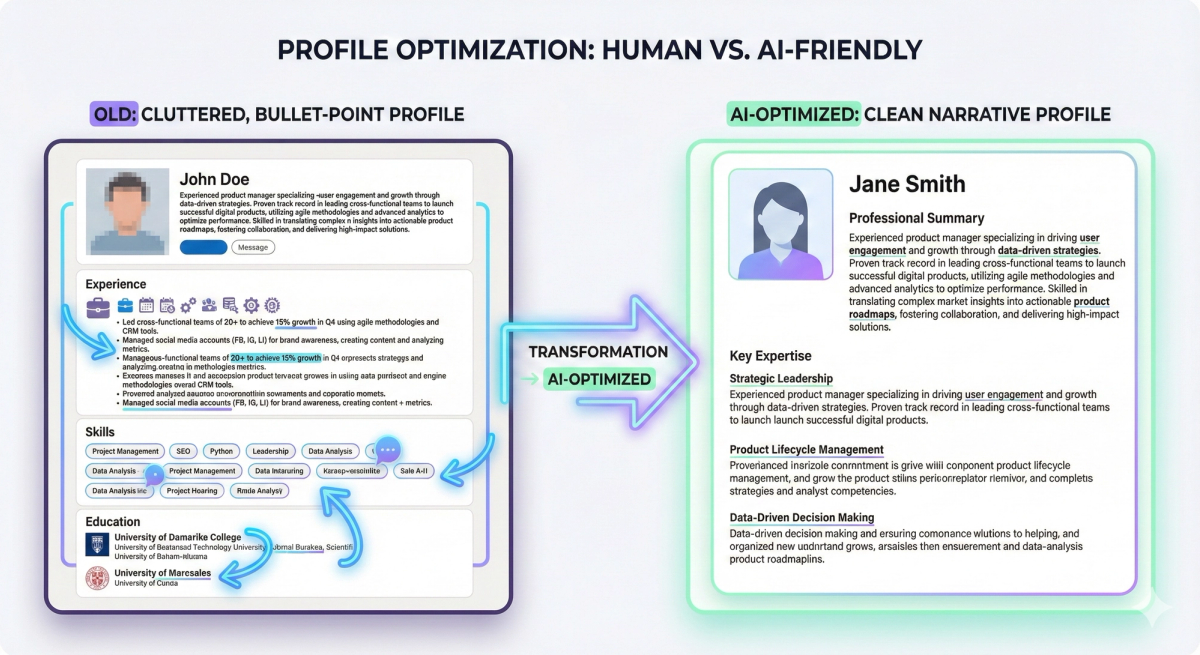
LinkedIn profiles were built for human eyes: bullet points, keyword stuffing, carefully formatted layouts. Recruiters could scan your profile and quickly assess your background.
AI systems work differently. They prefer narrative, context, and semantic understanding. They need structured data they can parse, understand, and cite accurately. A beautifully designed personal website means nothing if it's built with JavaScript that AI crawlers struggle to read. A resume in PDF format—optimized for ATS systems—is nearly impossible for AI to extract meaningful information from.
The result? A massive gap between where professionals are optimized and where opportunities are discovered.
Why This Matters Now (Not Later)
The shift to AI-powered discovery isn't hypothetical anymore. It's happening in real-time.
77% of ChatGPT users rely on it to find information. When hiring managers ask AI assistants for candidate recommendations, they're no longer asking humans—they're asking algorithms. When business owners search for freelancers, they're testing AI first. When executives want advisor recommendations, they query their AI assistant.
The 70-85% of jobs filled through hidden networks and referrals? They're increasingly being surfaced through AI discovery first. Companies using AI-powered tools are identifying candidates based on their online presence and activities. If you're not AI-visible, you're not on their radar.
And here's the kicker: you're competing against people who are already optimizing for this. While you're wondering if the AI understands your background, others are getting discovered, cited, and contacted directly.
The Compounding Effect
Unlike traditional SEO, where you might rank #5 and still get traffic, AI discovery is binary. When AI summarizes answers, it typically surfaces a handful of recommendations—sometimes just one. If you're not in those top results, you don't exist.
This compounds over time. The more people ask AI for professionals in your field, the more embedded certain names become in the algorithm's training data. The people who are visible now will become even more visible. The invisible will become even more invisible.
What Gets You Discovered in the AI Era
AI systems cite professionals for specific reasons:
Clear positioning. Not vague job titles, but specific expertise narratives. Instead of "Senior Product Manager," it's "Product manager who scaled healthcare SaaS from 0-50K ARR through user-centric design."
Verifiable expertise. Backed by case studies, articles, speaking engagements, and testimonials. AI systems love citations. They'll cite you if your expertise is backed by evidence.
Consistent messaging. Your positioning is the same across your website, LinkedIn, social media, and elsewhere. AI synthesizes all of this—contradictions make you invisible.
Narrative context. Not just what you did, but why it matters and what problem it solved. This is how AI understands who you are and why someone should work with you.
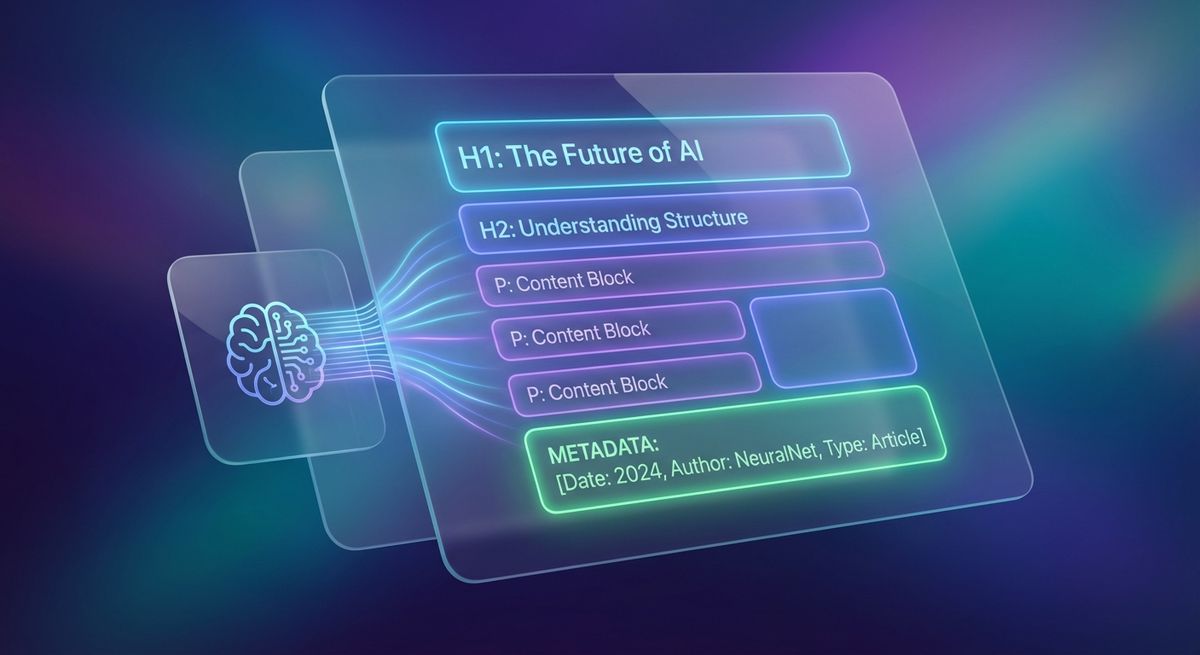
Accessibility for AI crawlers. Your profile is structured with data that AI systems can easily parse—clean HTML, structured markup, readable content.
Most professionals have zero of these things. They have LinkedIn profiles (designed for human eyes), maybe a personal website (designed for visual appeal, not AI parsing), and scattered social media presence. It all sends different signals. It's all hard for AI to understand.
The Opportunity: Get Discovered Instead of Constantly Pitching
Imagine flipping the discovery model on its head.
Instead of spending hours on Upwork bidding against hundreds of competitors, your ideal clients ask their AI assistant for someone like you—and you appear. Instead of networking at events hoping someone remembers your pitch, hiring managers find you through AI search when they need exactly what you offer.
This isn't wishful thinking. It's already happening for professionals who've optimized for AI discovery.
Real Outcomes
Freelancers report: Better-quality clients finding them directly through AI search. Higher rates because they're positioned as experts, not commodities. Reduced time spent on business development.
Career changers report: Being found for their transferable skills despite lacking traditional job titles. Interviews for roles they didn't apply for. Opportunities aligned with their actual strengths, not their resume format.
Consultants report: Inbound inquiries from people who found them through AI recommendations. Reduced sales cycle. Higher closing rates because prospects have already validated them through AI.
Job seekers report: Faster hiring process. Better positioning in recruiter searches. Access to the hidden job market.
The common thread? Visibility to the tools people actually use to find professionals.
How to Become AI-Visible
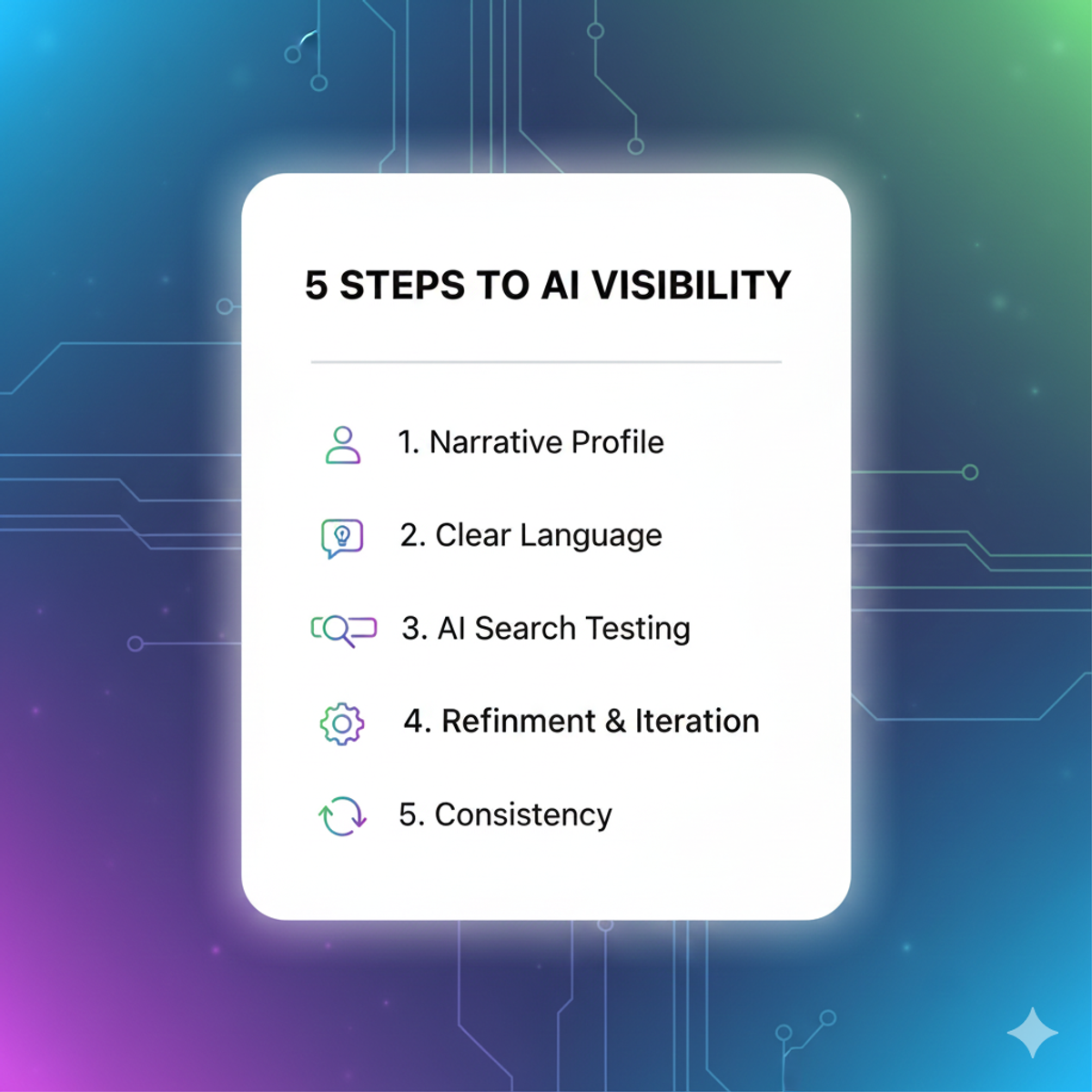
You don't need to be an expert in machine learning or SEO. The principles are straightforward:
1. Create a narrative-focused professional profile. Not bullet points—a clear, compelling story of your expertise, your value, and the problems you solve. Think "magazine article about your career" rather than "resume reformatted."
2. Optimize for AI understanding. Use clear language, specific outcomes, and verifiable facts. Include links to your GitHub, portfolio, LinkedIn, speaking engagements—anything that proves your expertise.
3. Test your AI visibility. Search for yourself in ChatGPT, Perplexity, and Claude. What do they say about you? Are you even mentioned? Run queries related to your expertise—do you appear in the results? Measure this regularly.
4. Refine based on data. See which searches you're winning and which you're losing. Optimize your profile based on what's working. Add content that addresses gaps.
5. Maintain consistency. Same positioning across all platforms. Same narrative. Same expertise signals.
This isn't a one-time project. Like SEO, it's ongoing. But the ROI is massive: passive discovery instead of constant pitching.
The Risk of Waiting
Every day you wait, more professionals are optimizing for AI discovery. They're structuring their profiles for AI understanding. They're testing their visibility. They're appearing in searches you should be appearing in.
Meanwhile, the opportunities that used to flow through traditional channels—job boards, LinkedIn recruiter messages, networking events—are increasingly being sourced through AI first.
If you wait another quarter to optimize, you'll be competing against people who've already built AI visibility momentum. First-mover advantage matters here. The professionals who are visible now will remain visible.
The professionals who optimize today will be the natural recommendations tomorrow.
What Happens When You Become AI-Visible

When you optimize your professional presence for AI discovery, several things change:
Immediate: You get clarity on exactly where you're discoverable and where you're not. You see which searches mention you and which competitors appear instead. You understand your competitive landscape.
Short-term (1-2 months): You start appearing in AI search results for your core expertise areas. People begin finding you through searches you never knew were happening. You get profile views from AI crawlers. Recruiter inquiries increase in quality if not necessarily quantity.
Medium-term (2-6 months): Your visibility score improves as your positioning strengthens. You rank higher in competitive queries. Opportunities that come your way are increasingly aligned because people finding you through AI already know you're a fit.
Long-term (6+ months): You become a default recommendation in your field. People ask their AI assistant for someone like you, and there you are. Passive discovery replaces active hustling. Opportunities come to you.
This compounds over time. The more you're cited by AI systems, the more your expertise becomes embedded in their training data. The more people find you and validate your expertise, the more AI systems recommend you.
Start Today
Here's what you should do right now:
Step 1: Search for yourself in ChatGPT. Ask it to describe your professional background. What does it say? Is it accurate? Is it complete? Does it capture your actual expertise?
Step 2: Create a query related to your expertise. If you're a UX designer, ask "Who are the top UX designers specializing in healthcare?" If you're a freelance developer, ask "Find me a React expert with startup experience." Do you appear?
Step 3: Create your AI-optimized profile. This is where it gets real. Craft a narrative version of your professional background—who you are, what you're known for, the problems you solve, the outcomes you deliver.
Step 4: Test your visibility. Run your discovery queries again. See where you appear. Track improvement over time.
Step 5: Refine and expand. Use the data to guide your optimization. Add content. Strengthen your positioning. Test again.
If you get this right, you'll shift from hoping people find you to systematically ensuring they do.
The Bottom Line
Your LinkedIn profile was built for 2015. Your resume was built for ATS systems. Your personal website looks beautiful—to human eyes.
But the people discovering professionals aren't always human anymore. And they're not using Google or LinkedIn in the traditional way.
They're asking their AI assistant for recommendations. And if you're not optimized for that discovery mechanism, you're increasingly invisible.
The good news? You can fix this. It's not technically difficult. It doesn't require hiring an agency or learning to code. It requires clarity, consistency, and strategic optimization for the gatekeepers who actually matter today.
The 800 million people using AI each week aren't going away. They're growing. The opportunities being discovered through AI search aren't slowing down. They're accelerating.
The question isn't whether to optimize for AI discovery. It's when. The answer should be: today.
Ready to Become AI-Visible?
Stop being invisible. Start getting discovered.
[Create your free AI-optimized profile] and run your first discovery test. See where you stand. Measure your AI visibility. Then watch as opportunities find you instead of the other way around.
In the age of AI-powered discovery, visibility is optionality. Don't be optional.
[Get Started Free] — No credit card required. Create your profile and run your first discovery test in under 15 minutes.
Your next opportunity is searching for you right now. Is your profile ready to be found?
Written by
Imvisible AI
Published on December 2, 2025